Written by Kimm Kennon, REALTOR® & Broker Associate, CRS, GRI, with Lakeland Real Estate NEOK. Helping families make confident moves since 2007.
The GRDA Taking Line is the surveyed boundary between privately owned property and land owned by the Grand River Dam Authority around Lake Hudson. On most waterfront lots, your deed runs to the taking line, and everything between that line and the water belongs to GRDA. That one line shapes what you can do with your shoreline, your dock, and even your view, so it is the first thing to understand about any lake property you are considering.
What exactly is the GRDA Taking Line?
GRDA owns and operates Lake Hudson, and it also owns a strip of land around the shoreline. The Taking Line is the boundary between that GRDA-owned property and the privately owned property around the lake. GRDA's own description is the cleanest one: the line is the boundary between GRDA-owned property and privately owned property around the lake, determined by a metes and bounds survey description, not by an elevation.
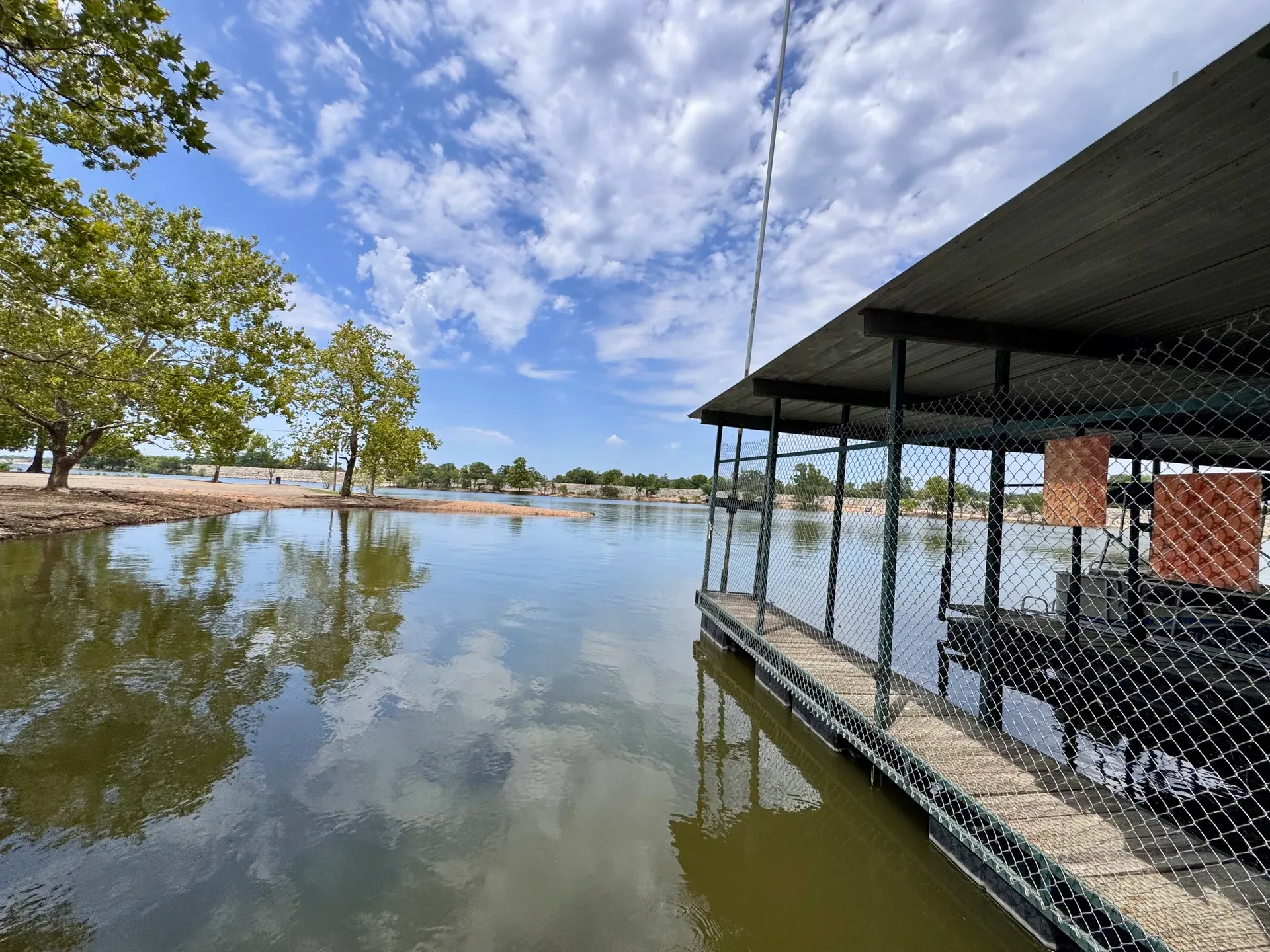
On a typical Lake Hudson waterfront lot, the practical effect is simple. Your deed usually runs to the taking line. The strip between the line and the water, plus the water itself, belongs to GRDA. That is why a lakefront lot is really two pieces: the private land you own, and the GRDA shoreline you get to use under GRDA's rules.
Where is the taking line on a Lake Hudson lot?
The taking line is a surveyed boundary, and its location comes from a metes and bounds survey description, not from guessing where the water sits on any given day. The shoreline can look very different from the line: water levels rise and fall, vegetation grows, banks erode and rebuild. The line stays where the survey says it is.
For any waterfront property you are serious about, the location of the taking line should be verified through the applicable survey, the title work and abstract, and GRDA's records. A licensed surveyor is the person who can show you where the line actually runs across the lot, and a current survey is one of the most valuable documents a lake property can have.
Why does the taking line matter when you buy on Lake Hudson?
Because so much of what makes a lake home enjoyable happens below the line. Docks, boathouses, seawalls, stairs, vegetation work, erosion control and dredging all take place on GRDA shoreline, so they are subject to GRDA permits and construction standards. Most changes below the taking line need GRDA approval before you build or alter anything.
Dock eligibility is the question buyers ask most. A waterfront location does not automatically guarantee dock approval. Whether a dock is possible on a specific lot depends on current GRDA permitting, the shoreline classification, water depth, spacing and site conditions. That is why the taking line, the survey and the existing dock's paperwork all matter before you make an offer.
Knowing where the line sits also protects you from a costly surprise. Encroaching on GRDA property, building something that does not meet GRDA standards, or assuming you can do shoreline work that needs a permit are the kinds of mistakes that show up after closing. The fix is to verify the line and the rules before you commit.
Does the taking line move with the water level?
No. The taking line is a surveyed boundary, not an elevation line. Water levels on Lake Hudson rise and fall through the year, but the line does not move with them. GRDA makes this point directly: the line is determined by a metes and bounds survey description, not an elevation. So the line on a survey today is the line you plan around, whatever the lake looks like on the day you visit.
What should you ask about the taking line before you make an offer?
Ask for the survey and confirm where the taking line sits in relation to the home, the shoreline, the access route and any dock. Ask whether the title work and abstract reference GRDA shoreline rights and the taking line. If there is an existing dock, ask about its permit and how GRDA's transfer process works for a sale. Ask what shoreline conditions affect the property, from water depth at the dock to erosion and vegetation. And ask your agent to help you confirm the details with GRDA, because regulations can change and every property is unique.
Frequently asked questions about the GRDA Taking Line
Do I own the land down to the water on a Lake Hudson lot?
Usually not. On most waterfront lots your deed runs to the taking line, and the strip between the line and the water belongs to GRDA. Verify the line on the survey for the specific property.
Can I put a dock on my Lake Hudson property?
A waterfront location does not automatically guarantee dock approval. Eligibility depends on current GRDA permitting, shoreline classification, water depth, spacing and site conditions. Check with GRDA for the specific lot.
Is the taking line the same as the high-water mark?
No. The taking line is a surveyed boundary established by a metes and bounds survey description, not by where the water has been or where it sits today.
Who do I contact about the taking line and shoreline work?
The Grand River Dam Authority. Its website explains the shoreline program and permitting, and its lake permitting office is reachable at lakepermits@grda.com.
Does the taking line affect resale value?
It affects what a buyer can do with the shoreline, including dock eligibility, so it is part of what makes a lake property valuable. A verified survey and clear GRDA records make a property easier to buy and sell.
None of this should scare you off a lake home. It should make you a smarter buyer. The taking line is part of what keeps Lake Hudson's shoreline open and natural, and the buyers who understand it are the ones who end up happiest with their dock, their view and their lot. When you are ready to look, browse current Lake Hudson homes at KimmKennonHomes.com.
Sources
Facts in this article come from the Grand River Dam Authority, the owner and operator of Lake Hudson and the authority on the Taking Line and shoreline rules. These links open in a new tab.
Ask Kimm
Ask Kimm about the taking line, a survey, or a specific Lake Hudson property
She knows this water and this land. Text or call 918-864-4922 or email kimm_lakeland@yahoo.com.